


Orphan's Tragic Death Sparks Outcry and Demands for Child Protection in Somalia
- by Muhammed, Abuja, RNG247
- about 1 months ago
- 209 views
In a heart-wrenching case that has sent ripples of outrage across Somalia, the brutal murder of 14-year-old orphan Saabirin Saylaan has ignited a fierce debate about child abuse in the nation. Currently awaiting execution for the crime, 34-year-old Hodan Mohamud Diiriye was convicted for killing the young girl, whose tragic story has touched the hearts of many.
Saabirin's life was already a tapestry of sorrow; orphaned at just one year old after losing both parents in quick succession, she was raised by her great-aunt, who initially ensured she received an education and attended a Quranic school. However, everything changed when her great-aunt agreed to let her stay with the family of Diiriye, who sought help at their home.
Tragically, retailing reports from police investigations revealed that during her two-month stay, Saabirin endured relentless physical abuse. It was only after her murder in November that harrowing details emerged, including evidence from Diiriye's phone that captured shocking audio footage of the alleged torment. In one chilling moment recorded, Diiriye cruelly remarks, "I'm enjoying your pain," reflecting the extent of brutality faced by the defenseless girl.
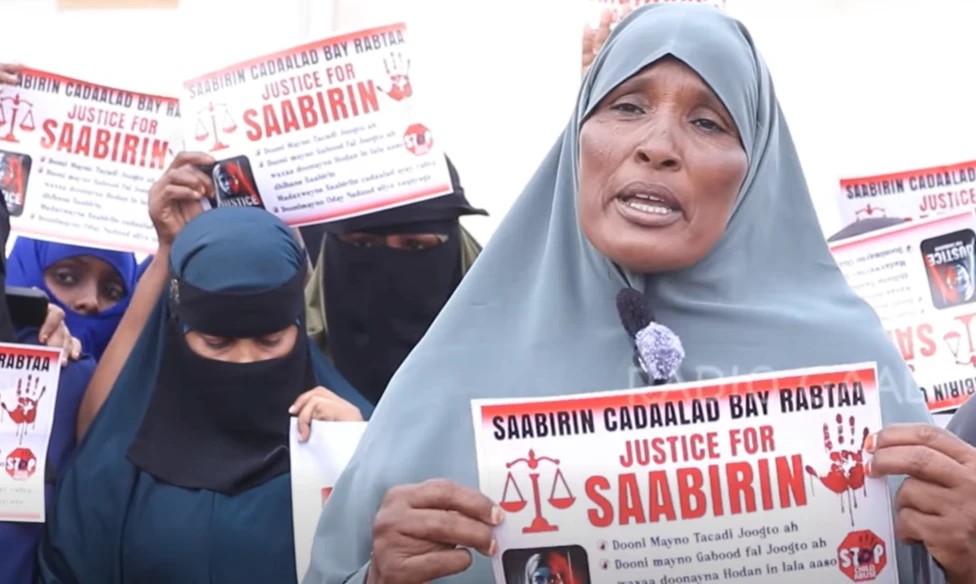
The public response to Saabirin's appalling death was swift and intense. Outrage erupted in Galkayo, where hundreds of women and youth took to the streets demanding justice, holding placards that read "Justice for Saabirin." Tensions escalated when protestors clashed with police, resulting in the tragic death of a young man, compounding the heartache felt by the community. Within the digital realm, young women amplified slogans and hashtags in a show of solidarity, vowing that no child should suffer such a fate.
Children in Somalia often suffer abuse hidden within the shadows of households, a silence perpetuated by familial ties and cultural customs that discourage external intervention. Despite the occasional judicial determination as in Diiriye's case, many such offenses remain unreported, shrouded in secrecy, and buried by traditional dispute resolution efforts. The anger expressed towards these customs was vocalized by 18-year-old Aniiso Abdullahi, who said, "We reject attempts by traditional elders to sweep this under the carpet."
As the trial unfolded, it was broadcasted live on social media, a bid to restore public faith in a struggling justice system. Police officials celebrated the conviction as a step towards accountability but acknowledged the need for a broader assessment of child safety measures in the country. Regional police commander Mohamud Abdihakim commented, “If evidence reveals additional individuals' involvement, the law will apply to them as well.”
Yet the battle extends beyond individual perpetrators. Child rights organizations have highlighted alarming trends of violence and abuse. Reports indicate that many cases remain hidden and unaddressed, with one organization revealing a spike in horrific acts against minors in recent months, including fatal arson and violent sexual assaults.
In the legislative sphere, Somali lawmakers have taken a significant step, ratifying the African Charter on the Rights and Welfare of the Child in October, a framework intended to combat child abuse and exploitative practices. However, shortly thereafter, the Ministry of Family and Human Rights Development stressed that these laws would be enforced under Islamic law, complicating the implementation of these critical protections.
Activists like Fadumo Ahmed have criticized the existing structures, pointing to pervasive corruption and the interference of clan elders, which often stifles the voices of victims. “Many families resolve matters privately without informing the state,” she revealed, highlighting a culture where justice is elusive for vulnerable children.
Shukri Ahmed Hussein, a government official, defended ongoing programs aimed at assisting youth and street children, while acknowledging that greater community awareness regarding child safety measures is indeed necessary. “Every child has the right to be removed from unsafe situations,” she asserted.
The grim fate of Saabirin Saylaan may have cast a shadow over her community, yet it has galvanized discussions on child safety and the protection of rights in Somalia. As emotions remain raw, and pressures mount for actionable justice, there is a collective yearning for systemic change.
Despite the verdict against her killer, advocates are cautious; they insist that true justice will not only hinge on punishment but on a structural overhaul of the systems that allow child abuse to thrive in silence. "We want to see change, not just promises," emphasized one young protester, reflecting the hope and demand for a safer future for all children.








0 Comment(s)